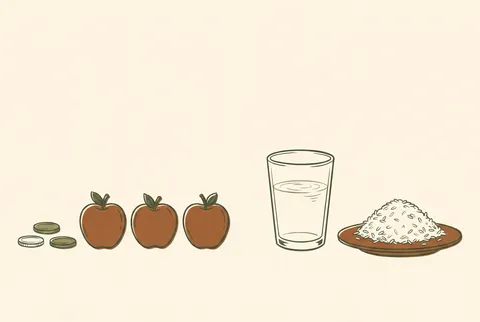
The basic difference
| Feature | Countable | Uncountable |
|---|---|---|
| Plural form | Yes: a book, two books | No: information, not Incorrect example. informations |
| A or an | Yes: an apple | No: some rice, not Incorrect example. a rice |
| Numbers | Yes: three chairs | No: three pieces of furniture |
| Verb | Singular or plural: The book is here. The books are here. | Always singular: The news is good. |
Common uncountable nouns
These nouns are countable in many other languages, so learners often get them wrong. In English they have no plural and no "a" or "an".
advice, information, news, furniture, luggage, baggage, equipment, homework, housework, money, traffic, weather, knowledge, research, progress, evidence, software, bread, rice, music, luck, fun
- Correct example. The news is on at ten. "News" ends in "s" but takes a singular verb.
- Correct example. I have a lot of homework. Not Incorrect example. many homeworks.
- Correct example. We need more information. Not Incorrect example. more informations.
How to count an uncountable noun
Add a unit word and "of".
- a piece of advice, two pieces of advice
- a piece of furniture, a piece of luggage, a piece of information
- a slice of bread, a loaf of bread
- a glass of water, a cup of tea, a bottle of milk
- a kilo of rice, a bar of chocolate
Quantity words
| With countable nouns | With uncountable nouns | With both |
|---|---|---|
| many | much | a lot of, lots of |
| a few, few | a little, little | some, any |
| fewer | less | more, enough |
| How many? | How much? | no, plenty of |
- How many eggs do we need? How much sugar do we need?
- There aren't many chairs. There isn't much space.
- In positive sentences, "a lot of" sounds more natural than "much" or "many": She has a lot of friends. He has a lot of money.
Some and any
- Use "some" in positive sentences: I bought some apples and some bread.
- Use "any" in negatives and most questions: I didn't buy any milk. Do you have any questions?
- Use "some" in offers and requests: Would you like some tea? Can I have some water?
A few and a little compared with few and little
With "a", the meaning is positive and describes a small number or amount. Whether it is enough depends on context. Without "a", the meaning is negative and describes almost none.
- I have a few friends here. Some friends. That is good.
- I have few friends here. Almost no friends. That is sad.
- “There is a little milk left.” A small amount. It may be enough for a coffee, depending on how much you need.
- “There is little milk left.” Almost none.
Nouns that can be both
Some nouns are uncountable for the material or the general idea, and countable for one item or one kind.
| Uncountable | Countable |
|---|---|
| I don't drink coffee. | Two coffees, please. (two cups) |
| The window is made of glass. | Can I have a glass of water? |
| I need some paper to write on. | I bought a paper. (a newspaper) |
| She has long hair. | “There is a hair in my soup.” |
| I don't have much time. | I have been there three times. |
| He has a lot of experience in sales. | The trip was a great experience. |
| We had chicken for dinner. | They keep six chickens in the garden. |
Common mistakes
She gave me a good advice.
She gave me some good advice.
Advice is uncountable.
The furnitures are new.
The furniture is new.
Furniture has no plural here and takes a singular verb.
How much people came?
How many people came?
People is plural and countable.
I have many works to do.
I have a lot of work to do.
Work is uncountable here.
The news are bad.
The news is bad.
News takes a singular verb.
We have less students this year.
We have fewer students this year.
Use fewer with countable students in standard writing.
Try the quiz
Choose the correct word.
- How (much / many) money do you have?
- There are only (a few / a little) tickets left.
- Can you give me (an advice / some advice)?
- The news (is / are) very good today.
- We don't have (much / many) time.
- I'd like two (breads / slices of bread), please.
- She did (a research / some research) on the topic.
- (Few / A few) people came, so the room looked empty.
- Is there (any / some) milk in the fridge?
- All my (luggage is / luggages are) in the car.
Check one question at a time
Try the same ten questions here. Check each answer and read the explanation.
Your result
Your result appears here when you finish.
Show all answers
- much. "Money" is uncountable.
- a few. "Tickets" is countable.
- some advice. "Advice" is uncountable.
- is. "News" takes a singular verb.
- much. "Time" is uncountable here.
- slices of bread. Use a unit word to count bread.
- some research. "Research" is uncountable.
- Few. Almost none, which is why the room looked empty.
- any. A normal question.
- luggage is. No plural, singular verb.