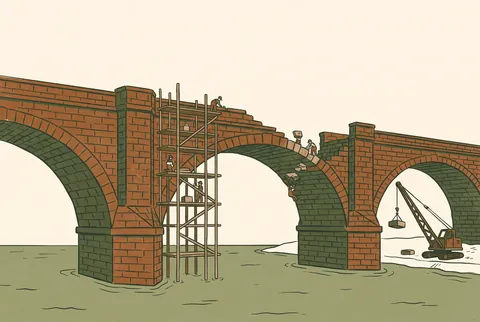
Passive voice rules across tenses
The usual pattern is subject + be + past participle. The past participle is the third verb form, such as made, written or taken. Regular past participles end in -ed, like repaired. The participle stays the same when the tense changes.
Choose be to match the time and the new subject. Use am with I, is with he, she, it or a singular noun, and are with you, we, they or a plural noun. Use was or were for the past.
| Tense or form | Pattern | Example |
|---|---|---|
| Present simple | am/is/are + participle | The bike is repaired here every year. |
| Present continuous | am/is/are being + participle | The bike is being repaired now. |
| Past simple | was/were + participle | The bike was repaired yesterday. |
| Past continuous | was/were being + participle | The bike was being repaired when I called. |
| Present perfect | has/have been + participle | The bike has been repaired. |
| Past perfect | had been + participle | The bike had been repaired before I arrived. |
| Will | will be + participle | The bike will be repaired tomorrow. |
| Modal | can/must/should + be + participle | The bike must be repaired. |
| Going to | am/is/are going to be + participle | The bike is going to be repaired. |
Keep every helping verb that the meaning needs. Being marks an action in progress. Been follows have in a perfect passive. In a simple modal passive, can, must or should takes be, without an ending.
| Sentence type | Example |
|---|---|
| Positive | The doors are locked at nine. |
| Negative | The doors are not locked at eight. |
| Question | Are the doors locked at nine? |
| Short answers | Yes, they are. / No, they aren’t. |
| Perfect question | Has the parcel been sent? |
| Perfect short answers | Yes, it has. / No, it hasn’t. |
| Modal question | Can the ticket be changed? |
| Modal short answers | Yes, it can. / No, it can’t. |
Put not after the first helping verb. Move that verb before the subject for a yes/no question. Don’t add do or did to a be-passive question. In short answers, repeat only the first helping verb.
When the person doing the action is unknown
Use the passive when you don’t know who did something. You can also use it when the person is obvious or unimportant. The person or thing doing the action is called the agent.
- My bag was stolen on the train.
- The classrooms are cleaned every evening.
- Your application has been received.
We don’t need “by someone” in the first example. The other sentences concern the cleaning and the application, rather than the workers.
When the action or result matters most
Start with the topic your reader already knows. The passive helps you keep that topic at the beginning of the next sentence.
- We bought an old flat. The kitchen was replaced last year.
- The bridge is being checked, so please use another road.
- All the tickets have been sold.
Compare “We have sold all the tickets”. That active sentence draws attention to what we have done. Both choices are correct. Choose the one that fits your message.
Passive voice in formal and scientific writing
In a method or process, the steps may matter more than the people. Passive sentences help you describe those steps. These are sample sentences, not reports of a real study.
- The water was heated slowly.
- Each sample was placed in a clean container.
- The results were checked by another researcher.
Formal writing can use active sentences too. “We checked the results” clearly names the researchers. Follow the needs of the text. Don’t change every active sentence just to sound formal.
Passive voice examples in news
News reports often begin with the person, place or event affected. A passive can report an event before the writer knows who caused it. These are invented examples for grammar practice.
- Several roads were closed after the storm.
- A missing child has been found.
- The new library will be opened on Monday.
Use the full verb form in a normal sentence. News headlines sometimes leave out be, as in “Road closed after storm”. That short headline pattern isn’t the usual pattern for body text.
When to include the by-phrase
Add by + agent when the identity matters. Leave it out when it adds no useful information. The passive doesn’t require a by-phrase.
- The menu was designed by my sister.
- The window was broken by a falling branch.
- The form must be signed before Friday.
An agent can be a thing, as the branch example shows. Use with for a tool in sentences such as “The bread was cut with a knife”. After by, use object pronouns, such as me, him, her, us and them.
How to change active to passive
First find the object of the active verb. Ask what or who receives the action. Then follow these steps.
- Move the object to subject position.
- Keep the tense, but use the right form of be for the new subject.
- Change the main verb to its past participle.
- Add by + the old subject if that information matters.
The active object “the door” becomes the passive subject “The door”. “Painted” becomes “was painted”. The old subject, Mia, appears after by. There is no direct object in this passive sentence.
Worked example with the past simple
The chef cooked the meals. → The meals were cooked by the chef. Move “the meals” first. Keep past time with were, because meals is plural. Cooked is also the past participle.
Worked example with an action in progress
They are repairing the lift. → The lift is being repaired. The present continuous becomes is being + repaired. Use is for the singular lift. Leave out the unknown workers.
Worked example with the present perfect
She has written the report. → The report has been written by her. Keep has and add been. Written is already the past participle. Her is the object form of she. In real writing, keep “by her” only if the reader knows who she is and her identity matters.
Verbs with two objects
Give, send, offer and teach can take a person and a thing as objects. With these verbs, either object can often become the passive subject.
- They gave me a book. → I was given a book.
- They gave me a book. → A book was given to me.
- The school offered her a place. → She was offered a place.
When the person comes first, use a subject pronoun. Me becomes I, and her becomes she. When the thing comes first in these examples, use to before the person. This pattern doesn’t work with every verb. Say “The rule was explained to me”, not “I was explained the rule”.
The get-passive in informal English
In conversation, get + past participle can describe something that happens to a person or thing. It often describes a change or an unexpected event.
- My phone got damaged in my bag.
- She got promoted last month.
- Did anyone get hurt?
The event can be good or bad. For neutral or formal writing, be is usually the safer choice. Get-passive questions and negatives use do in simple tenses, as in “He didn’t get invited”. Don’t treat every get phrase as a passive. “Get tired” can simply mean “become tired”.
Passive forms with reporting verbs
Use it is said that to report what people say without naming them. You can also start with the person or thing being discussed, followed by is said to.
- It is said that he lives abroad.
- He is said to live abroad.
- She is believed to have left yesterday.
The first two sentences report the same idea. Verbs such as think, believe and report also allow these patterns. Use to have + past participle for an action earlier than the reporting. In the last example, the belief is current, but her departure happened yesterday. A reporting passive presents a claim, not proof.
Have something done
Use have + object + past participle when you arrange for another person to do a job for you. Keep the object between have and the participle.
- I had my hair cut yesterday.
- We are having the windows cleaned.
- She will have her bike repaired tomorrow.
“I cut my hair” means I did it myself. “I had my hair cut” usually means someone else cut it. This pattern can also describe an unwanted event, as in “They had their bags stolen”. They didn’t arrange the theft.
Verbs that cannot be passive
Happen, arrive and die are intransitive verbs. They don’t take a direct object, so they cannot form the usual passive.
- The accident happened at night.
- Our train arrived late.
- The plant died in the heat.
Don’t add be before these past forms. “The accident was happened” is incorrect. Some other verbs have both transitive and intransitive uses. Compare “Someone opened the door”, “The door was opened” and “The door opened”. The last sentence is active. The door is its subject, and no agent is named. Some verb + preposition groups allow a passive, as in “The children were looked after by their aunt”. Keep the preposition in this pattern.
Past simple active forms and -ed adjectives
An -ed ending alone doesn’t make a verb passive. Compare “The workers repaired the roof” with “The roof was repaired”. The first sentence is past simple active. The second is past simple passive.
Irregular forms make the difference clearer. Mia wrote the email. The email was written by Mia. Wrote is past simple. Written is the participle used after was.
Some words ending in -ed work as adjectives. I am interested in music. This describes a feeling or state. It isn’t an action performed by music. Compare The students were interviewed by a reporter. That sentence reports an action.
Context can allow both readings. “The door was closed” can describe its state or a closing action. “The door was closed by the guard at six” clearly describes the action. Check the meaning as well as the spelling.
Common mistakes
The room cleaned every day.
The room is cleaned every day.
A present simple passive needs is before the participle.
The letter was wrote yesterday.
The letter was written yesterday.
Use the participle written after was.
The doors was locked.
The doors were locked.
The plural subject doors needs were.
Did the parcel sent yesterday?
Was the parcel sent yesterday?
Move was before the subject in a be-passive question.
The work has finished by the team.
The work has been finished by the team.
A present perfect passive needs been.
The ticket can changed.
The ticket can be changed.
Use be after the modal in this passive.
The accident was happened yesterday.
The accident happened yesterday.
Happen has no object and cannot form this passive.
The picture was painted by she.
The picture was painted by her.
Use an object pronoun after by.
For speakers of Chinese, Japanese and Korean
Chinese doesn’t change verbs for tense in the same way as English. If you leave out be or its tense ending, practise “is made, was made, has been made” as complete groups.
Japanese and Korean have passive patterns that can describe how an event affects someone. A direct translation can give an unnatural English passive. Check whether the English verb or verb + preposition group allows a passive before moving a noun to subject position.
For any first language, test a difficult sentence in active form first. “Someone arrived the train” doesn’t work. So use “The train arrived”, without was. These checks help with possible transfer errors; they don’t describe every learner.
Try the quiz
Complete each gap. Write all the missing words. Use be for passive forms and follow the form named in each instruction.
- Use the present simple passive. These bags ___ (make) from paper.
- Use the past simple passive. The window ___ (break) last night.
- Use the present continuous passive. The bridge ___ (repair) right now.
- Use the past continuous passive. The rooms ___ (clean) when we arrived.
- Use the present perfect passive. The emails ___ (send) already.
- Use the past perfect passive. The door ___ (lock) before we got there.
- Complete the future passive. The results will ___ (announce) tomorrow.
- Complete the modal passive. This form must ___ (sign) today.
- Complete the passive. The old shop is going to ___ (close).
- Change to passive. They gave me a book. I ___ a book.
- Use happen in the past simple. The accident ___ yesterday.
- Report an earlier event. People believe she left yesterday. She is believed ___ yesterday.
Check one question at a time
Try the same 12 questions here. Check each answer and read the explanation.
Your result
Your result appears here when you finish.
Show all answers
- are made. Bags is plural, so use are + past participle.
- was broken. Use was for past time and broken as the participle.
- is being repaired. Being shows that the repair is in progress.
- were being cleaned. The action was in progress at a past moment.
- have been sent. A plural subject takes have, then been + sent.
- had been locked. The locking happened before another past event.
- be announced. After will, use be + past participle.
- be signed. Must takes be + past participle in the passive.
- be closed. Going to takes be + past participle here.
- was given. Me becomes I, followed by was + given.
- happened. Happen is intransitive, so don’t add was.
- to have left. The departure happened before the current belief.