Build the past perfect form
Use had + past participle. Had stays the same with I, you, he, she, it, we and they. You don't add -s for he or she. The past participle is the verb form used after have, has or had in perfect tenses.
| Form | Pattern | Example |
|---|---|---|
| Positive | Subject + had + past participle | She had finished. |
| Negative | Subject + had not + past participle | She hadn't finished. |
| Question | Had + subject + past participle? | Had she finished? |
| Short answers | Yes, subject + had. No, subject + hadn't. | Yes, she had. No, she hadn't. |
For a question with a question word, put that word first. Why had they left? When who is the subject, keep the normal subject order. Who had taken my seat? Don't use did with had.
Regular participles end in -ed, like worked and finished. Many common verbs are irregular. Their past simple and past participle forms may differ.
| Base verb | Past simple | Past participle |
|---|---|---|
| go | went | gone |
| see | saw | seen |
| write | wrote | written |
| eat | ate | eaten |
| have | had | had |
Had had is correct when have is the main verb. We had had lunch, so we weren't hungry. The first had builds the tense. The second means eaten in this example.
Short forms in speech and writing
I'd, you'd, he'd, she'd, it'd, we'd and they'd can mean subject + had. Hadn't means had not. They'd left means they had left. Use the full had in a positive short answer, as in Yes, they had.
'd can also mean would. Compare I'd seen it with I'd see it. Seen is a participle, so the first means had. See is the base form, so the second means would.
Past perfect examples of an earlier action
Start with a point in the past. Then use the past perfect to look further back. The earlier event often explains the situation at that later point.
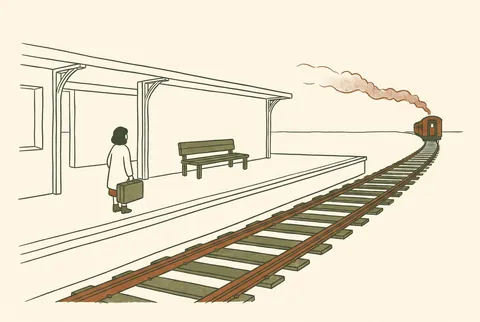
- When I reached the station, the train had left. I missed it.
- Mina couldn't open the door because she'd lost her key. She lost it before she tried the door.
- We were pleased with the room. The hotel had given us a larger one.
- By the time the lesson started, I'd finished the reading.
Read the timeline from left to right. First, the train left. Later, I reached the station. Both events happened before now.
The order of the clauses doesn't change the order of the events. The train had left when I reached the station. The train still left first.
The later past point can be in another sentence or understood from the story. You don't need two verbs in every sentence. But an event does not need the past perfect just because it happened long ago. Say My grandfather moved here in 1950. Use a past reference point when you look further back.
Experience and time up to then
Use the past perfect for experience before a past moment. Already means before that moment, sometimes earlier than expected. Just means a short time before it. Never ... before means at no earlier time.
- I was nervous on the flight because I'd never flown before.
- When we sat down, the film had already started.
- She had just made tea when I called.
- By 2020, he'd lived in Taipei for ten years.
Put already, just and never between had and the participle in these patterns. Don't add not to never. You can ask about experience with ever. Had you ever used that app before the course?
The past perfect can describe a state continuing up to a past point. The Taipei example doesn't tell us whether he moved away after 2020. For gives a length of time. Since gives the starting point, as in He'd known her since school.
Past perfect in reported speech
When you report someone's words with said or told, the past perfect can show that their action came before their words. Moving a tense back in this way is called backshift.
- “I've sent the file.” → She said she'd sent the file.
- “I missed the bus.” → He told me he'd missed the bus.
- “We hadn't met before.” → They said they hadn't met before.
Present perfect commonly changes to past perfect. Past simple can change to past perfect too. An original past perfect normally stays past perfect. Change pronouns and time words when the new context needs it.
Backshift isn't compulsory in every report. Speakers may keep the original tense when the information is still true or the time is clear. Past perfect is useful when you need to make the earlier time clear.
Imagine a different past with if
Use if + past perfect to imagine a past condition that didn't happen. The result often uses would have + past participle. This pattern is called the third conditional.
- If I'd checked the address, I wouldn't have gone to the wrong building.
- If we'd booked earlier, we could have sat together.
- She would have joined us if she'd finished work sooner.
Here, the past perfect describes an imagined past, not an event that really happened. In the first example, I didn't check the address and went to the wrong building. Could have describes a possible result or opportunity.
Use had in this if clause. Keep would have for the result in the standard third conditional pattern. Read the conditionals lesson for other patterns and mixed time meanings.
Past regrets with wish
Use wish + past perfect when you want a past event to have been different. The wish is often expressed now, but it concerns a past event. You can't change it.
- I wish I'd saved a copy. I didn't save one.
- She wishes she hadn't sold her bike. She sold it and now regrets it.
- We wish we'd taken the earlier train. We took a later one.
A negative past perfect reverses something that happened. A positive one can describe something you didn't do. Compare I wish I knew his number with I wish I'd known his number yesterday. The first concerns now. The second concerns the past.
Past perfect continuous
Use had been + verb-ing to focus on an activity continuing up to a past point, or recently ending before it. The activity may explain a past result.
- We'd been waiting for an hour when the bus came.
- Her shoes were muddy because she'd been walking in the park.
- I'd been studying all morning, so I took a break.
Compare I'd written three emails with I'd been writing emails for an hour. In this pair, the simple form counts finished results. The continuous form focuses on the activity and its length.
State verbs such as know and believe usually take the simple form. Say I'd known him for years. Don't use been knowing for this meaning.
Past perfect vs past simple
Use past simple to tell events in order. I arrived, put down my bag and called her. Each event moves the story forward. You don't need past perfect for every action in a past story.
Past perfect looks back from the story's past point. Compare these sentences carefully.
- When I arrived, she left. She left at or soon after my arrival.
- When I arrived, she had left. She left before my arrival. She wasn't there.
Choosing had left changes the order, not just the style. The first sentence doesn't by itself tell us why she left. Don't assume that my arrival caused it.
When before and after make the order clear
Before and after often make past perfect optional. After she'd checked the form, she sent it. You can also say After she checked the form, she sent it. Both put the check first. The perfect form stresses that it was complete.
The same choice is possible with She checked the form before she sent it and She had checked the form before she sent it. Use the simpler form when the order is already clear and no extra emphasis is needed.
But before + past perfect can also show that something wasn't complete. The shop closed before I'd finished choosing. I was still choosing when it closed. Don't apply “past perfect means first” mechanically to this pattern.
By the time sets a later past limit. By the time I arrived, she'd left. Past perfect makes the completed earlier action clear. This core use works in both standard British and American English.
Common mistakes
She had went home.
She had gone home.
Use the past participle gone after had.
He has finished before I arrived yesterday.
He had finished before I arrived yesterday.
Had finished places the completion before a past arrival. Past simple is also possible with before.
Did you had eaten?
Had you eaten?
Move had before the subject. Do not add did.
We hadn't saw the message.
We hadn't seen the message.
Negative forms also need the past participle.
I hadn't never flown before.
I'd never flown before.
Never already makes the meaning negative in standard English.
If I would have known, I would have called.
If I had known, I would have called.
Use past perfect in this standard unreal past if clause.
I wish I have saved the file yesterday.
I wish I'd saved the file yesterday.
Use past perfect after wish for a regret about the past.
She had been knowing him for years.
She'd known him for years.
Use the simple form of know for this state.
For Chinese, Japanese and Korean speakers
If you speak Chinese, you may rely on time words or context instead of changing the verb. In English, don't let already replace the tense. Practise the pair She had already left when I called, with had and the participle together.
If you speak Japanese, you may carry a past verb form into English without adding had for a look back. First choose the later past point. Then mark the earlier event with had + past participle when that relationship needs emphasis.
If you speak Korean, you may try to match a Korean past form to one English tense in every sentence. That can lead to using past simple for both events. Write the events in time order first, then decide whether the English sentence looks back.
These are possible learning problems, not rules about speakers. For any first language, ask yourself which past time you are looking back from.
Try the quiz
Use the past perfect simple unless the question asks for another form. Write the full verb phrase in each gap.
- When I opened my bag, I saw that I ___ (forget) my notebook.
- We ___ (not meet) before that evening.
- ___ you ___ (finish) before the lesson started?
- By the time the guests arrived, she ___ (already cook) dinner.
- I was excited because I ___ (never see) snow before.
- Use past simple for the next event. I opened the door and then ___ (sit) down.
- Show that she left before my arrival. When I arrived, she ___ (leave).
- Backshift the verb. “I have lost my ticket.” He said he ___ his ticket.
- If we ___ (leave) earlier, we wouldn't have missed the train.
- I wish I ___ (not send) that message yesterday.
- Use past perfect continuous. We ___ (wait) for an hour when the doors opened.
- Use past perfect simple. They ___ (have) lunch, so they were not hungry.
Check one question at a time
Try the same twelve questions here. Check each answer and read the explanation.
Your result
Your result appears here when you finish.
Show all answers
- had forgotten. Forget has the participle forgotten; the forgetting came before opening the bag.
- hadn't met. Use had not + past participle for a negative earlier experience.
- Had, finished. Put had before the subject and use the past participle.
- had already cooked. Already goes between had and the participle in this pattern.
- had never seen. Never refers to the time before that past moment.
- sat. Past simple moves the story forward to the next event.
- had left. Past perfect puts her departure before my arrival.
- had lost. Present perfect changes to past perfect when you backshift.
- had left. Use past perfect for the unreal past condition.
- hadn't sent. Wish + negative past perfect expresses regret about sending it.
- had been waiting. Had been + verb-ing focuses on the activity up to that past point.
- had had. The first had builds the tense; the second is the participle of have.